
![[personal profile]](https://www.dreamwidth.org/img/silk/identity/user.png)


return to due South: season 4 episode 1 (or season 3 episode 14) "Dr. Longball"
Dr. Longball
air date September 23, 1998
Scene 1
Huey is in Welsh's office, handing him back a file.
HUEY: You're talking to the wrong guy, massa.
WELSH: Well, I gotta go, and I can't drive with my foot like this. [He gets up from his desk and hobbles out into the squad room; his right foot is in a walking boot, his trouser leg slit open to accommodate it. He finds Dewey.] How about you? You look like you could use some fresh air.
DEWEY: I hate fresh air. Why, why, why don't you get Vecchio?
WELSH: Vecchio is on holiday.
DEWEY: Yeah? Where?
HUEY: At a club couple's place in, ah, Mexico.
DEWEY: Vecchio? Club couples? Who with?
HUEY: Remember that chick he busted last month for passing bad checks?
DEWEY: Oh, man, that's low. I mean, I grovel once in a while, but to bust a chick for a date? The man has no standards.
WELSH: What's going on here? I'm talking about a day off with pay.
HUEY: Yeah, but it's in the country, Lieutenant.
FRASER: [just arriving] Good morning, sir.
WELSH: Ah, Constable. Come here, I want to show you something. [He opens the file Huey handed him.] Now, what do you see in front of you?
FRASER: Photographs.
WELSH: That's America. That is the heartbeat of America. [He's showing him pictures of a small town somewhere. Dreamy piano music starts to play.] I mean, white picket fences, courtyard in the square, cracker barrel in the general store. And all you have to do is give me a ride up there.
The last picture is of the Willison Sheriff's Department, with a sheriff or deputy waving next to an SUV out front. It morphs into a slow-motion video as Welsh continues in voice-over.
WELSH (VO): I'll show you a place where they — people still care about their neighbors. Where you can park your car in the street all night, it'll still be in one piece in the morning. Where you smell apple pie every day, hmm? [A kid on a bicycle rides by. The scene is idyllic.]
FRASER (VO): [The sheriff is waving down traffic as he helps an older woman cross the street.] Sounds like home. Of course, we tended more towards brown lichen tarts than apple pie, but —
WELSH (VO): Right, right. Well, we'd better get a move on to be in time for the game.
FRASER (VO): Game, sir?
The nostalgic piano music gives way to a 50s-style choral backing group.
CHOIR: ♫ . . . and the wind and the sun is in Willison . . . ♫
People are arriving at a small regional ballpark, where a game is going to begin shortly. An eagle mascot wearing number 1/2 is entertaining the spectators. Guys are taking batting practice. The music modulates into "Take Me Out to the Ballgame."
ANNOUNCER: And it's a beautiful day for baseball here in the tri-county region, as the Greater Willison area — where we don't just produce milk, we produce goodness — wraps up its week-long Festival of Cheese with a season-ending three-game series against cross-county rivals the Corrington Crowns. There's been no love lost between these two teams this year, as Willison has yet to defeat Corrington in regular-season play. The season has been a disaster thus far for the Hawkeyes, with the team rife with dissension, much of it centered around the play of vaunted slugger Kelley Olsen. Olsen is in the throes of a season-long slump, which, barring a turnaround, could end his career.
Olsen, a dude with longish hair wearing number 7, misses an easy hit in batting practice. The manager, an older guy with a big wodge of tobacco tucked in his lower lip, calls to him. (Next to the manager is a Black man in a team uniform wearing about seven heads of garlic around his neck and waving another bunch of them. Behind them is another guy with a bat.)
MANAGER: Olsen! Love you, son, love your hairstyle, but I'm telling you, you gotta swing at least hard enough to crack an egg.
ANNOUNCER: Hawkeyes manager Huck Bogart, with two more victories, would enter the record books as the winningest manager in minor league history.
Olsen swings harder at the next pitch and fouls a ball back so hard the manager, Bogart, has to dive off his chair to avoid being hit. People applaud.
MANAGER (BOGART): Now that's the juice I'm looking for! That's a nice cut!
ANNOUNCER: But amidst rumors that Bogart may not have his contract renewed next year, this may be his last shot at the record book.
A good-looking young player is talking to some girls at the fence rather than warming up.
BOGART: Hey! Romeo! We got this thing called practice!
ROMEO: Okay. [He tips his cap.] Ladies.
ANNOUNCER: And just about the only bright spot for the Hawkeyes this season has been the play of mid-season acquisition Pete Cossantino, whose play down the stretch — [Romeo (Cossantino), wearing number 19, hits a 350-foot home run on the first practice pitch. The girls jump up and down and cheer. He takes a bow.] — and hits like that one, whoa-ho, let me tell you, you're going to see a lot more of this guy! You know, baseball has its ups and downs, folks, it's just like life. And I guess that's why they call it America's pastime.
On the cue "America's pastime," a guy loads a handgun and pulls a ski mask down over his face. Another guy pulls a stocking mask over his own face. A third guy racks a long gun. Music cue: "Take Me Out to the Ballgame" by Trevor Hurst. The three of them bust through a door.
WOMAN WITH A COFFEE CUP: What the hell —
Take me out to the ballgame
HANDGUN: Cut it out! Don't move.
Take me out with the crowd
The woman starts to reach for a phone.
HANDGUN: Don't!
He swats her away. She shrieks and recoils.
Buy me peanuts and crackerjack
I don't care if I ever get back
A man gets up to challenge the robbers. They pistol-whip him to the floor.
WOMAN WITH A COFFEE CUP: Hector!
HANDGUN: Shut up!
LONG GUN: Come on, let's move it.
HANDGUN: Move it, move it, let's go, let's go!
The robbers finish loading their bags and split. The woman rushes to the unfortunate Hector, who is unconscious.
WOMAN WITH A COFFEE CUP: Hector! Oh . . .
Oh, it's one, two
Three strikes you're out at the old ballgame.
The woman looks around for help.
Yeah okay blah blah Welsh wants Fraser to give him a lift back to 1958, or failing that to Willison, which is presumably in Wisconsin because of all the dairy references, minor league baseball, crime does in fact exist even in the heartland, the announcer does some nice expository work, I guess we're going on another field trip. But WAIT JUST A SECOND, Huey called Welsh "massa," and nobody in the squad room blinked or was in any way surprised? Just me? Huey is about a millimeter shy of openly observing that the 27th precinct is run like a plantation and that is somehow not the subject of this episode? Doesn't even warrant a tiny bit of scrutiny? Nothing? I'm the only one talking about this? Holy shit.
Credits roll.
Paul Gross
Callum Keith Rennie
Beau Starr
Camilla Scott
Tony Craig | Tom Melissis
Ramona Milano
and Gordon Pinsent as Fraser Sr.
(plus Draco the dog)
Dean McDermott, Max Gail Jr., Wanda Cannon, Richard Fitzpatrick, and Bruce Weitz as Huck
Scene 2
Fraser and Welsh are pulled over to the side of the road. Welsh has his booted foot propped in the passenger side window; Fraser is waiting for Diefenbaker, who is on a bio break.
WELSH: So he graduates from the police academy, works a year in Chicago, then he comes up here to Nowheresville to take a sheriff's job. Real waste of some great training.
FRASER: I wasn't aware you had a brother, sir.
WELSH: Anyway, he calls me, and he's freaking out. It seems there's a crime wave here in Nowheresville. I mean, uh, arson at the local factory, the stores being broken into, somebody's trying to sabotage the local baseball team. Well, after I stopped laughing —
FRASER: You find this funny, sir?
WELSH: Yeah. Well, after you've seen fourteen-year-olds killed by hypos, yeah.
FRASER: Point taken.
WELSH: It's vandalism. Y'know, bleachers collapsing, uh, somebody's poisoning the food concession, stuff like that.
FRASER: That — that does sound somewhat serious, sir.
WELSH: Oh, that's why we're here. We're the pros from Dover. I figure we could wrap this up maybe in an hour. [He fidgets for a moment.] Constable. Can I ask for your advice?
FRASER: My advice, sir?
WELSH: Yeah, your advice.
FRASER: If, if I can help.
WELSH: If you had somebody you were trying to forgive, no matter how hard you tried to forgive 'em, you just couldn't forgive 'em, what would you do?
FRASER: Keep trying, sir.
Sigh. So look, the nature of crime in the big city is different from the nature of crime out in the sticks, sure. Probably so is the staffing. A sheriff's department is a lot fewer people responsible for a lot more ground than a local police department; they may have more officers per capita, but those capitas are spread out over a huge area, so my guess is they're a lot more reactive than preventive, crime-wise. (Police departments and sheriffs' departments don't always see one another as colleagues, for some reason.) Also, this is 1998, which means out in Nowheresville there's probably a nontrivial amount of recreational meth use and the odds are pretty good Welsh's brother has seen 14-year-olds killed by hypos. I choose to live in a city myself, but I don't have a lot of use for Welsh's urban chauvinism.
I also don't have a lot of use for Fraser's "keep trying" advice, because as we all know, sometimes the best thing you can do with a relationship is let it be over, and if Welsh doesn't speak to his brother he probably has a reason and "but faaamily" UGH, though we do get it from lead characters who are sole survivors, don't we. Fraser here; Josh Lyman (who doesn't quite qualify, because his mother is still living) in The West Wing s4e11 "Holy Night" when he brings Toby Ziegler's estranged father to the White House and says "Because you don't know what I know! . . . That I would give anything to have a living father who's a felon or a sister with a past." It's well meant but he shouldn't have done it, because people's complicated relationships are their own business. In the present instance, though, I can forgive it because Welsh did ask Fraser for his advice.
So Fraser is on this trip because Welsh has busted his right foot in some manner and can't drive the car himself. Which means Fraser is driving, and this is going entirely uncommented-upon, which is bigger news than it is being treated as. And "the pros from Dover" is a M*A*S*H reference. In the book, Pierce used to run a con where he claimed to be a golf pro from Dover to cadge invitations to play for free; later in the book and also in the movie, he and Trapper are called from Korea to Tokyo to do surgery on a congressman's son, and he hollers about being the "pros from Dover" (which they really are in this instance, not a con) but not having access to recent pictures of the injury. (It never turned up in the TV series.) The fact that the character is, like the Willison baseball team, called Hawkeye (. . . does that mean we're in Iowa instead of in Wisconsin?) may mean something is happening here or just that someone in the writers' room had M*A*S*H on the brain.
Scene 3
Hector is being taken away on a gurney.
FIRST EMT: All right, let's go.
SECOND EMT: Excuse me, folks, can we get through here?
SHERIFF WELSH: Yeah, thanks.
FIRST EMT: Watch your back. Excuse me.
Bogart clamors past the departing EMTs to get to where Sheriff Welsh and the Woman With A Coffee Cup are talking.
BOGART: What the hell is going on? The players are walking off the field!
SHERIFF WELSH: There's been a robbery, Huck. They got the payroll.
WOMAN WITH A COFFEE CUP: And Hector has been hurt.
BOGART: Who cares? We're ahead six-one! We forfeit the game!
WOMAN WITH A COFFEE CUP: A man is hurt, Huck.
BOGART: He's not a man, he's an accountant! Look, we've gotta find money. Two games to three thousand, and I can't win 'em by myself!
He fights his way out (he is wearing number 8) past an entering man in a business suit with a cigar. The crowd can be heard cheering, which I guess means we're in the stadium office.
WOMAN WITH A COFFEE CUP: Winston.
WINSTON: Olivia. Are you all right?
WOMAN WITH A COFFEE CUP (OLIVIA): I'd be a damn sight better if we had a sheriff with some stones.
SHERIFF WELSH: Hey!
WINSTON: I'm going to do something about that, Olivia.
SHERIFF WELSH: Thank you for your support, Mr. Mayor.
WINSTON: Look, I've done everything I can for you, Welsh, but nobody's gonna stand for this anymore. We already lost Johansson's lumber mill to arson. The department store closed after that last robbery. What the hell do you expect me to do? Keep you on till every business we have is run out of town?
SHERIFF WELSH: I told you, I, I've called for outside help. Experts in the field.
WINSTON: Yeah.
He and Olivia scoff. Sheriff Welsh is stung.
It doesn't really make sense to me that Sheriff Welsh has such a different accent than Lieutenant Welsh, but what can you do. Right now the thing is playing out like Willison, Wisconsin, is not unlike Cabot Cove, Maine, a charming little place with a sudden surge of crime. If this were Murder, She Wrote I'd be putting my money on Huck Bogart (given Bruce Weitz's and/as credit) to get a letter opener between the shoulderblades, given his lack of sympathy for the injured Hector.
Scene 4
Fraser and Welsh are still pulled over. Welsh is sitting on the ground next to the car. Fraser is still waiting for Diefenbaker.
WELSH: And your dog's got a bladder the size of a Zeppelin.
FRASER: Salty food. I can't seem to keep him away from it.
He hears an engine and pulls out his spyglass to see who else is on the road with them. A couple of guys hop out of a white panel van and pull off their ski masks.
WELSH: You see something?
A car pulls up behind the van. Guys load cash out of the back of the van and into the trunk of the car. When one of the guys closes the van's back door, it turns out Fraser is standing right there waiting for him.
FRASER: Afternoon.
He kicks the shotgun out of the guy's hand, punches him in the jaw, and tackles him to the ground. One of the other guys aims a handgun at Fraser as he stands up, but Diefenbaker jumps and knocks Fraser back down again and the guy shoots out the back window of the van. The handgun guy starts freaking out. The shotgun guy jumps in the trunk as the third guy starts the car and drives away. Handgun runs around to the driver's side of the van, where Welsh clotheslines him. Fraser watches the car drive off.
WELSH: [with his foot on Handgun Guy's chest] You get a number?
FRASER: Yes, I did.
I guess I don't see why moving things from a van to a car is inherently suspicious and why Fraser and Welsh had to come along and bust it all up. I mean once they began to bust it became clear they'd come upon something totally hinky; but all this just off the fact that Fraser heard an engine? While he was out on a . . . road?
Scene 5
Sheriff Welsh is on the phone and chewing gum. A deputy is also present.
SHERIFF WELSH: Mm-hmm, they were heading east out of town. Not that that means anything. [Welsh comes into the office.] Yeah, just have your troopers keep an eye out for me, Walt. Thank you. [He hangs up the phone.] Harding.
WELSH: Wilson. [He looks all around, not making eye contact.]
SHERIFF WELSH: What happened to your foot?
WELSH: Ah, junkie. Chicago.
SHERIFF WELSH: What happened to the junkie?
WELSH: Well, they had to wire his jaw.
SHERIFF WELSH: Gum? [offers him some]
WELSH: Sure. [He takes a piece of gum.] So these are your headquarters, huh?
SHERIFF WELSH: Yeah, just like the city, only smaller. Uh, Bernie, get on out to the truck stop on the interstate, will you? See if anybody saw anything.
BERNIE: [who looks just like Francesca Vecchio; racks a long gun with one hand] You got it, Chief.
WELSH: Who's that? She's —
SHERIFF WELSH: Deputy. Like a detective. Y'know, just like the city.
Fraser knocks on the doorjamb and comes in to give Welsh a bag of cash.
FRASER: Gentlemen.
WELSH: Here it is. The stadium payroll. [He hands it over to Sheriff Welsh.]
FRASER: And I imagine you'll be wanting to speak with this fellow. [He has shown Handgun into the office.]
WELSH: The other two got away, but we got a good look at them.
SHERIFF WELSH: Rusty Barnstead. What have you gotten yourself into this time? [Handgun (Rusty) starts to cry.]
WELSH: You know this guy?
HANDGUN (RUSTY): [sobs] I can't. I'm sorry, Sheriff. I . . .
Rusty comes and cries on Sheriff Welsh's shoulder. The sheriff pats him.
The fact that Harding Welsh has a brother named Wilson just makes me so tired all over again.
I like that Ramona Milano is the sheriff's deputy. Big fan of alternate-reality episodes where the cast gets to do something different for a change. (See, e.g., Torchwood s2e5 "Adam," Bones s4e26 "The End in the Beginning," any of about a dozen episodes of Star Trek: The Next Generation.) I also like that Sheriff Welsh is pointing out to Lt. Welsh that in fact law enforcement is not dissimilar in different jurisdictions.
If Fraser has brought back the stadium payroll, which I guess was still in the back of the van, what all did Rusty and his friends put in the trunk of the car before it drove off?
Scene 6
In the holding cell, Rusty Barnstead is still hysterical.
WELSH: He gonna stop crying?
SHERIFF WELSH: He's upset.
WELSH: Yeah, he wasn't upset when he cracked that guy's skull in.
SHERIFF WELSH: Can I talk to you for a minute? [He tugs Welsh out into the hallway.]
WELSH: I've got guys in Chicago, you can put out a cigarette out on 'em, they don't flinch. I'll break this kid —
Sheriff Welsh shuts the door as Rusty continues to sob. Fraser offers Rusty a handkerchief.
SHERIFF WELSH: I walked Rusty to school on his very first day, okay? You know, I live with these people. It's a community. You can't come here and, and, and, and terrorize them.
WELSH: You called me for help.
SHERIFF WELSH: And I want your help, but this is Willison, it's not Chicago. You gotta respect that.
WELSH: You called me to help with your job, okay? I got my methods. If you can live with them, fine, I'll help you out. If not, I'm outta here.
SHERIFF WELSH: You just haven't outgrown it, have you?
WELSH: What's that? [He is getting a cup of coffee. A chessboard is set up next to a typewriter over in that corner of the room.]
SHERIFF WELSH: Competing with me.
WELSH: Competing for what?
SHERIFF WELSH: Everything. For, for Susie DeLessen. For who's gonna be quarterback on the football team. For who can sit on the railroad tracks the longest.
WELSH: [dismissive] Oh, I always could stay the longest.
SHERIFF WELSH: For Dad's approval.
WELSH: [defensive] I never needed his approval.
SHERIFF WELSH: Oh, no?
WELSH: No. And let me tell you something. How could I possibly compete with all of this?
SHERIFF WELSH: I was hoping for more that that, you know? I was — I was hoping that — [Fraser is in the doorway; he tries to back away, but Sheriff Welsh knows he's been overheard.] Forget it.
FRASER: It turns out that Rusty met the other two men in a bar three days before the robbery, and they were looking for a driver who was familiar with the area, so I think we can assume that they were from out of town. I have taken the liberty of removing his belt, his shoelaces, and his wristwatch, and I also took the liberty of placing him into holding cell number one. [He hands Sheriff Welsh the keys.] And I would respectfully suggest that we get over to the stadium as quickly as possible.
Fraser heads out. Sheriff Welsh is surprised. Lt. Welsh does a nod and shrug.
WELSH: He's Canadian.
SHERIFF WELSH: Oh.
As we might have suspected, the Welsh brothers' backstory is deeper than Lt. Welsh initially suggested. And given the heat with which Harding Welsh insists he never needed his father's approval, it seems like he's actually the odd one out, not Wilson Welsh, right? Like in scene 2 it sounded as if both brothers went to the police academy and then Wilson deviated from what had always been the plan to go off and be a sheriff in a rural (or exurban at the most) county. But now it feels like both brothers went to the police academy and then Harding Welsh decided to stay in the city. Like they grew up in the country and Harding moved to the city and is kind of being a jerk about it, to be honest. Because there's no zealot like a convert.
Scene 7
In the locker room after the baseball game, Bogart is mad. The guy who had been waving all the garlic is brushing at his uniform with a feather duster.
BOGART: Someone is trying to screw me, plain and simple! [He picks up a trash can and hurls it against a locker. One guy jumps out of the way. Cossantino is cowering.]
SOMEONE IN THE LOCKER ROOM: Coach . . .
BOGART: How many wins did Sal Arpeggio have?
MASCOT: Twenty-nine hundred and seventy-three.
BOGART: [throwing a water cooler] That's right!
SOMEONE IN THE LOCKER ROOM: Watch it —
BOGART: And Jack McDonough?
MASCOT: Two thousand, nine hundred and ninety-nine.
BOGART: [throwing a bucket of balls] That's right! Did anybody ever go three thousand?
MASCOT: No, boss.
BOGART: That's right! [He throws a bat. It breaks something, probably a mirror.] Nobody! Because that record is mine. Mine! Look!
SOMEONE IN THE LOCKER ROOM: [as most if not all of the team leaves] Chill out!
BOGART: Now my players are walking out! Well, sic me running! [They have gone. He turns back to the mascot.] Get me a coffee.
MASCOT: What?
BOGART: Coffee! Please?
MASCOT: As you wish, sir.
He starts to go but is waylaid in the doorway by Fraser and the Welshes—and Diefenbaker, who is barking up a storm.
BOGART: What the hell is that?
FRASER: Terribly sorry, sir. His name is Diefenbaker. He's half wolf. Well, he — as a pup, he was mauled by a wolverine with a goiter. I can only assume that — well, I think it's the, the outfit your mascot is wearing seems to have made him relive the event.
BOGART: And who the hell are you?
SHERIFF WELSH: Huck, this is Lieutenant Harding Welsh of the Chicago Police Department, and this is Constable Fraser of the Royal Canadian Mounted Police. He first came to Illinois on the trail of his father's killer, and for a number of interesting reasons he's, he's stayed —
FRASER: — attached as liaison with the Canadian Consulate.
BOGART: You're kidding me.
FRASER: No, sir, I'm not.
BOGART: Welsh. You any relation to him?
WELSH: Yeah, I'm his brother.
BOGART: Hope you're not as thick as he is. 'Cause if you are, we should just start walking backwards now.
WELSH: Hey, you keep talking, mulch mouth — [Fraser and Wilson stop him advancing toward Bogart.]
SHERIFF WELSH: Harding —
FRASER: Sir, please. This is a community.
SHERIFF WELSH: Thank you.
FRASER: Mr. Bogart, if what I overheard is accurate, you believe that the attacks on the team are directed at you personally? Do you have any reason to believe this?
BOGART: Yeah, I got a reason. [He takes a note out of his hat and hands it to Fraser.] This was on my desk this morning.
FRASER: [reads the note] "You'll never reach three thousand."
BOGART: Two games left to three thousand, and now I got no team!
He storms out past the mascot, who has returned with a cup of coffee and at whom Diefenbaker is barking again.
It's probably just as well that Bogart not drink that coffee, unless the mascot brought him decaf. I'm not sure what we're supposed to think of this guy, but it's hard to see anything except a wildly abusive boss. (The names he mentions are fictitious, and no minor league manager has ever won 3,000 games.)
I do like that for whatever issues Welsh has with his brother, he doesn't want anyone else saying anything bad about him. (Oh and I guess we're in Illinois after all.)
Scene 8
The baseball team, a motley crew including what sure looks like at least one young woman, are leaving the stadium when Olivia calls to them.
OLIVIA: Fellas, can I talk to you for a minute? Please? Just for a minute. [They gather up around her.] Thank you. Look. I understand how you feel. You hired on here to play baseball, not to be a part of some nightmare sideshow. I understand that. [Bogart arrives and listens from the back.] My late husband loved this ball team. And his last wish when he was dying was that we win the pennant. And I promised him we would. [Fraser and both Welshes come outside.] Now, obviously, that's not gonna happen this year, but there's always the future, right? So I'm begging you: Stick with me, please. Two more games. Finish the season. 'Cause I have a feeling next year is gonna be our year.
The guys all scoff. A player wearing sunglasses and chewing gum rolls his eyes.
GUM-CHEWING PLAYER: [who looks just like Constable Turnbull] Sing us another tune, sweetheart.
SHERIFF WELSH: [quietly to Olivia] Look, we recovered the money. It's in the office.
OLIVIA: Fellas, one more thing. Your payroll. [They all stop and look back at her, unimpressed.] It's in the office.
That cheers everyone up immediately. They all head inside. Bogart slings his arm around Olsen.
BOGART: Son, I need to talk to you in the locker room.
OLSEN: Sure thing, skipper.
They go inside.
Scene 9
In the locker room, Olsen slams his locker door.
OLSEN: You can't sit me down!
BOGART: Put yourself in my position. You got two games left to break the record, and the guy on first is hitting one-eight-nine. What would you do? You'd put in Cossantino.
OLSEN: You miserable bastard. You know there's a scout from the Yankees coming to look at me!
BOGART: Okay, you wanna play hardball, let me show you how to play hardball. They don't have to see you play to know that you're an over-the-hill lump who's hitting twenty points below his own body weight. Them's the breaks. That's baseball.
I'm thinking a lot about Bull Durham (1988) right now. Can't imagine why.
Scene 10
Fraser is outside the stadium and has to step back as Olsen slams out a side door and stalks away.
WELSH: Fraser, I gotta get off this foot.
SHERIFF WELSH: We can go out to my spread.
The sheriff's SUV drives up to a camper van on the edge of some woods. There's a couple of grills out front, some firewood, a washing line, two pink flamingos, a deck chair and chaise longue, and about a 9'x9' square of astroturf or that green indoor-outdoor carpet under an awning to make a "lawn."
FRASER: It's a beautiful setting for a spread.
WELSH: Oh, yeah. Nice spread.
They all get out of the car and move toward the van. Diefenbaker sniffs at one of the flamingos and whimpers.
FRASER: Leave them! [explains to Welsh] He has a phobia about pink flamingos.
Sheriff Welsh shows them inside.
SHERIFF WELSH: Here it is.
FRASER: Very nice. Beautiful woodwork.
WELSH: It's a little small.
SHERIFF WELSH: Well, I, uh — I got plans to build something, you know, but, uh. [He pauses.] You got a big place in Chicago?
WELSH: No. Nah, just about the same size.
SHERIFF WELSH: Well, uh. I'll get the mug book.
He heads over to the other room of the camper van. Fraser brushes away a buzzing fly and looks at a framed photo on the wall: three men in police uniform.
FRASER: Is this your father, sir?
WELSH: Yeah.
FRASER: He looks very proud.
WELSH: Yeah, it was the proudest day of his life. It's when Wilson graduated from the police academy. When I graduated, he couldn't make it.
SHERIFF WELSH: [returning] He was sick that day.
WELSH: If there was a two-for-one sale at the liquor store, he would've been there on a stretcher.
SHERIFF WELSH: Come on, Harding. Give him a break, huh? He's an old man now. He's broken down. He's sick. Just let it go.
WELSH: I let him go a long time ago.
SHERIFF WELSH: Well. Here's the mug book. [He puts an album down in front of Welsh.]
WELSH: Mug book? This is a mug page. You got a crime wave going here and you got no criminals?
SHERIFF WELSH: Got no criminals 'cause I done a damn good job here the last twenty years.
WELSH: Yeah, well, maybe me and Fraser go back to Chicago, then, let you handle it by yourself. [Fraser is uncomfortable.]
SHERIFF WELSH: Constable, do you —
FRASER: No, not at all. [He flees.]
SHERIFF WELSH: Now, look. I'm two years from retirement, I'm about to lose my job. I don't mind telling you it scares the hell outta me. I thought you might want to help. But if all you want to do is make fun of what a small-town loser I am? Well, then, why don't you go on back to your big-time cop shop. I'm going for a walk.
He slams out. Welsh is unhappy. Fraser comes back in.
FRASER: Sir, I've been thinking.
WELSH: This better have something to do with baseball.
FRASER: Oh — of course. It occurs to me that since this is a small town, and news travels fast, that our presence here is likely known. I think we should consider the introduction of a third party unknown to the town who could infiltrate the clubhouse and report to us from the inside.
WELSH: And that would be?
A car drives away from disgorging a passenger with a duffel bag and a baseball bat and glove. Dusty western showdown-at-the-corral music plays on a bass. (Do I recognize this music cue or does it just Sound Like That? There isn't another soundtrack credit in the end titles. Hmm.) The passenger is wearing boots and jeans and a Mexican poncho; it is Kowalski, and he is chewing on a toothpick.
Why does Wilson Welsh keep the mug book at his home instead of in his office?
ADR alert: "I let him go a long time ago" is not quite what Welsh said, but I can't make out what he did say before it was dubbed over in post.
I also have some questions about the travel time between Mexico (a big place, but let's assume the club couples place where he was on vacation was in, like, Cancún) and the side of the road in Willison,
WisconsinIllinois, to which Kowalski appears to have hitchhiked—after stopping off in Chicago to pick up his bat and his glove. When did Fraser even call him? And how? It cannot possibly be the same day Fraser and Welsh arrived in Willison any longer; where are they staying? Or is the whole town of Willison in some sort of temporal vortex (which might explain how Francesca and Turnbull have presences there) where the county sheriff reports to the town mayor for some reason instead of to, you know, the voters who elected him? (The sheriff being responsible for law enforcement in the town doesn't bother me, because the town is probably too small to have its own police department. But the mayor isn't the sheriff's boss, and short of losing a regularly scheduled or a recall election, I don't see how Wilson Welsh loses his job.)
Scene 11
Fraser and Kowalski are driving on a country road.
FRASER: Your name will be Ace Leary.
KOWALSKI: Man, I've gone to some lengths to ditch a date, but this is new.
FRASER: The relationship didn't work, then, I take it?
KOWALSKI: Anh, the plane barely touched down in Acapulco and she took off with this guy who was selling ponchos on the street.
FRASER: Oh, so you didn't get the girl, then.
KOWALSKI: Nah. Got this poncho.
FRASER: It's very fetching.
KOWALSKI: You realize I haven't swung a bat in years, Fraser.
FRASER: You used to work out with the Cubs, didn't you?
KOWALSKI: Yeah, but that was a long time ago.
FRASER: Well, they're only looking for someone who can hit three-eighty.
KOWALSKI: Three-eighty?
FRASER: Mm-hmm.
KOWALSKI: They think I can hit three-eighty?
FRASER: Mm-hmm.
KOWALSKI: I'm dead.
FRASER: Oh, no, you can do it. It's sort of like riding a bicycle. You never really forget, do you?
KOWALSKI: Look, I was exaggerating, Fraser. I was embellishing. Haven't you ever exaggerated or, or embellished?
FRASER: No. And in any case it's only for a couple of games. The main thing is that you find the saboteur. And if you really don't want to play, I'm sure the manager will come up with some excuse to keep you on the bench.
KOWALSKI: What are you saying? That I can't cut it? I — I can cut it.
I'm handwaving Fraser's reverse psychology and handwaving Acapulco instead of Cancún and focusing on "they're only looking for someone who can hit .380." In the first place, the highest major league career batting average of all time is .366 (Ty Cobb). The best season average in the modern era was Ted Williams's .406 in 1941; since then only four players have had seasons at or above .380 (one of which was Williams himself in 1957). It just doesn't happen that often. Batting averages tend to be a little higher in the minor leagues, because pitching tends to be a little weaker, but even then it's not frequent. It's a preposterous bar to set for Kowalski to achieve. And in the second place, I don't see how Fraser wouldn't know this, having apparently read everything he could get his hands on as a child, having almost total recall of everything he's ever read or heard, and being familiar enough with baseball (or softball) to recognize that Thatcher's ERA of 1.3 over 30 games was very good. So . . . is he hoping Kowalski will think he doesn't know .380 is a lot to ask?
Scene 12
Kowalski is introducing himself to the team. The gum-chewing player who looks like Turnbull is wearing a t-shirt that proclaims him "The Grand Salami."
GUM-CHEWING PLAYER: Name's Bubba Dean. Welcome to the funhouse.
Kowalski heads to a locker. Dean slaps his ass. Kowalski scoots past Cossantino and starts changing.
ROMEO (COSSANTINO): So you're the hotshot from the great white north. Eh? Where'd you play?
KOWALSKI: Ah, Moose Jaw.
COSSANTINO: Huck says you've been hitting three-eighty. What do they throw up there, anyway? Curve balls, sliders, fastballs, fork balls?
KOWALSKI: [taking off his pants] Ha. Mostly, ah, snowballs.
COSSANTINO: Well, down here they throw heaves.
Cossantino shuts his locker with his bat and biffs off. Kowalski throws his pants and his boots in his own locker and takes off his shorts. Before he can stand up, a woman walks into the locker room and stops right in front of him. He stands up slowly, taking in her boots, jeans, cropped top, pierced navel, and fringed leather jacket.
WOMAN: [who looks just like Inspector Thatcher] Ace Leary?
KOWALSKI: [al fresco] Um.
WOMAN: Toni Lake. Action Sports. [She beckons to a cameraman, and now Kowalski is on television in the altogether.] Ace Leary, somewhat of a mystery man, signed out of the Canadian league. Ace, are you concerned at all about fitting in with this new league so late in the season?
KOWALSKI: Uh, I just want to go out there and help the team in any way I can. Look, can I put some clothes on for this?
WOMAN (LAKE): Don't worry, sweetheart. Unless you Canadians have something I haven't already seen.
KOWALSKI: Uh, you know, I'm gonna take it, uh, you know, game by game, and go out there and do my best, and try not to play with myself. I, I mean, play within myself.
It looks like Cossantino is feeling a little threatened by the arrival of Leary. Way to show team spirit, kid.
Rennie is still wearing underwear; the waistband is visible for a second when he goes to drop Kowalski's boxer briefs, but we are absolutely meant to understand that Kowalski is standing there naked when Toni Lake comes in and can't get away. I don't know what the union rules are for nudity on television or if/how they differ from broadcast rules. I mean for sure frontal male nudity is right out. Probably so is frontal female nudity below the belt, and now that I think about it I guess prime time broadcast TV doesn't show breasts either (cable TV is a whole other situation, of course). But women are topless on television all the time; the audience never sees a nip slip, but your actresses are bare to the waist and that's a thing that happens. Either she's got her back to the camera or there's a strategically placed item of set dressing or props or clothing that covers it up. And when people take their pants off it's the same; the camera and some number of objects work together to make us "believe" (not that we really believe) that a person is naked when they are wearing something as brief as possible so it looks more or less as though the obstruction is obstructing only what it needs to and not whatever underthings they're wearing so they're not displaying to the whole crew. There are occasional exceptions. John Barrowman bared it all in Doctor Who (2005) s1e7 "The Long Game," and seemingly the whole cast of NYPD Blue got their asses out at one time or another (and the show went to court to fight the fines they incurred for indecency, and won). But generally, in e.g. Friends and How I Met Your Mother as here, a person who is supposed to be naked from the waist down is visibly nothing of the sort, which is as it should be, if you ask me.
Scene 13
Fraser and Diefenbaker are coming along the hallway toward Olivia's office.
OLIVIA: You want to buy the team, you'd better show me the color of your green, buster, 'cause a lot of towns out there'd like to have the Hawkeyes.
WINSTON: Olivia, let's be honest. The team is practically bankrupt. I'm just trying to bail you out and give the town a boost at the same time.
OLIVIA: No, you're not. You're trying to screw me. Well, go ahead, buster, because — [Fraser knocks on the door.] — come in. [He does.] Constable Fraser, what a nice surprise.
FRASER: Ma'am.
OLIVIA: This is Winston Cohoon, our mayor.
FRASER: Ah, pleased to meet you, sir.
WINSTON: Nice to meet you.
OLIVIA: The mayor and I were just discussing a business transaction.
FRASER: So I heard.
OLIVIA: Oh. Well, you know, small towns. We know everybody. We can speak frankly.
FRASER: Yes, that's true. Although, you know, I have heard young ladies on the streets of Chicago discussing business deals in, well, very similar terms.
I'm pretty sure Fraser just called either Olivia or the mayor a whore. Neither of them seems to be offended by this.
WINSTON: [gnawing on a cigar] Don't tell me, let me guess. You're from Canada.
I don't know why the mayor thinks this is an incisive guess given that Fraser is wearing the red Mountie uniform. "Let me guess, you're from Canada." Where else could he be from? Disneyland, I suppose.
FRASER: Why, yes, sir, I am.
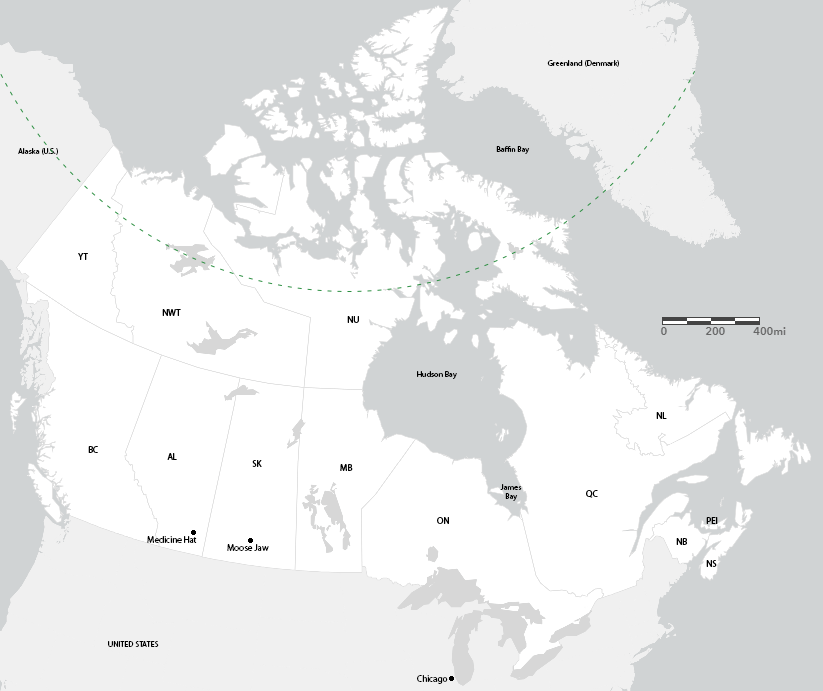
WINSTON: I love it up there. Matter of fact, the council and I were just talking about the possibility of setting up a cultural exchange with, ah, Medicine Jaw.
FRASER: [cracks his neck] Medicine Hat?
WINSTON: Yeah, that's the place. Uh, we could send them a couple of blocks of Illinois cheese, and they could send us some, uh, beaver meat or something in return. [Diefenbaker growls.]
FRASER: Oh, I'm sorry. Diefenbaker feels a particular kinship with the beaver. It's as if we were discussing — well, eating a member of the family.
WINSTON: I see.
OLIVIA: Constable Fraser is here with a team of Chicago detectives.
WINSTON: Oh, you're the pros that Welsh brought down.
FRASER: That is correct, yes.
WINSTON: How's it going?
FRASER: We have some very good leads, and we're confident that we will be able to apprehend the men who stole the payroll.
WINSTON: Good. It's about time we got some decent police work in this town. I'm glad to meet you. Oh, hey, listen, uh, you want a block of cheese, you just call my office.
FRASER: Oh, thank you kindly. You know, oddly, I have been thinking about cheese lately.
WINSTON: Yeah. [He pops off.]
OLIVIA: So. You are going to put a stop to this, aren't you?
FRASER: Well, we are trying our best, ma'am. Do you mind if I ask you a question?
OLIVIA: Shoot.
FRASER: You are considering selling the team?
OLIVIA: Well, I'm — uh — I'm in negotiations.
Olivia is flirting with Fraser in a way we haven't seen in a wee while; this is kind of a return to the early days of the show where every woman he met just salivated over him. Janet Morse was a little more decorous than that, and otherwise the only women he's interacted with are Francesca and Thatcher—who do embarrass themselves a bit, but at least he already knows them, so it's somehow not the same as complete strangers flinging themselves at his feet—and the only other women he's met for the first time are Sergeant Thorne, whatshername the Russian spy, and Stella Kowalski, none of whom could have been less interested in him. He seems fractionally less uncomfortable with Olivia's attention than he used to be with other random women's, either because she's being a little subtler about it than the Tammy Markles of the world or because it's been almost five years and he's growing accustomed.
I still think Wisconsin would have made more sense if they're going to keep talking about cheese.
Scene 14
At the ballpark, Cossantino is taking batting practice with a pitching machine. He isn't doing that well.
BOGART: My mother's got a better swing than that, she's been dead twenty years!
Cossantino gets back into his stance and then ducks when the machine spits one right at his head. The machine starts flinging balls too fast for him to get away from; one of them hits him, and he cries out and goes down. Bogart and Kowalski, wearing number 3, run for the batting cage.
KOWALSKI: [calling out to Fraser] Red! Red! Gotta shut it off! Shut it off! Switch on the side! Switch on the side of the machine! [Fraser pulls the plug.] Or you could do it that way.
COSSANTINO: I think my arm's broken.
BOGART: [to the mascot] Hey, birdbrain. You got ten dollars?
MASCOT: Sure, Huck.
BOGART: All right. Call a cab and get Romeo to the hospital. [He reaches the pitching machine, which Fraser and Kowalski are examining.] What the hell happened?
KOWALSKI: Uh, someone must've been screwing with the machine.
BOGART: You're kidding me. Would that be what made the pitching machine change into a Gatling gun?
KOWALSKI: What is that?
FRASER: That's sarcasm, Ace.
KOWALSKI: That's what I thought.
FRASER: It would appear that there's a crucial gear missing.
BOGART: There's gonna be some heads missing some gears too, I don't find out who did this. Woody! You were in early. Who did this?
MASCOT (WOODY): It was fine this morning, Huck. Domingo, Cossantino, and Anderson all took BP.
BOGART: Olsen!
OLSEN: Yeah, skipper?
BOGART: You're back in the lineup. Let's see if you can remember how to hit a baseball.
COSSANTINO: You. You did this to me, huh?
OLSEN: Well, what the hell for?
COSSANTINO: Get your place back in the lineup.
OLSEN: You're full of crap, Cossantino.
BOGART: Boys, boys. We got work to do.
KOWALSKI: [to Fraser, while the ball players are arguing] You like Olsen for this?
FRASER: Well, he does seem to have motive, although I fail to see how he could have predicted that the injury would fall to Cossantino.
KOWALSKI: Timing. Cossantino was first up after lunch. Everybody knew that.
FRASER: Hmm.
Kowalski is wearing Babe Ruth's number, and I will not be told that was a coincidence.
Scene 15
In the sheriff's office, Welsh is on the phone. Rusty Barnstead can still be heard sobbing in the holding cell.
WELSH: All right, Jack. Thank you. [He hangs up.] So what've you been doing?
SHERIFF WELSH: I have been talking to people, Harding.
WELSH: You get information that way?
SHERIFF WELSH: Usually.
WELSH: Oh. What'd you get this time?
SHERIFF WELSH: Not much.
WELSH: Well, I picked up a phone with a certain tone of voice, and my guy on the other end jumped. Turns out that green K-car was stolen in Chicago the night before the robbery, and we found it on the South Side this morning. Now, I got the mug books coming over. These guys were pros, they might be in the system. That's what I've been doing.
As you know, if the Barenaked Ladies had a million dollars, they'd buy you a K-car, a nice reliant automobile.
My feeling is there's probably room for both the police and the sheriff's department, and a little interagency cooperation (rather than competition) wouldn't be out of line, but what do I know?
Scene 16
In the locker room, Kowalski opens up Olsen's locker. He's poking around in it when Woody the mascot comes in to get the head to his costume.
WOODY: You looking for something?
KOWALSKI: [stuffs something in his shirt and closes Olsen's locker] Uh, all these lockers, they, uh, look the same, they —
WOODY: Yeah. That's probably why Kelley has that big-ass picture of himself on his.
KOWALSKI: Oh, yeah.
All the lockers have guys' names taped on them, too. I'd like Kowalski to have been able to come up with a better excuse than playing dumb again.
Scene 17
Kowalski is showing Fraser and the Welshes what he found in Olsen's locker.
KOWALSKI: This is the gear, right?
FRASER: Yes, it is. It's odd he would leave it in his locker, though.
KOWALSKI: Well, so he's a doofus. Olsen's still gotta be our man.
SHERIFF WELSH: You know, I've known Kelley a long time. He's done a lot of good for the town, you know, always been there for charity work —
WELSH: So what are you saying? A guy does charity, he can't have a little ambition?
SHERIFF WELSH: No, but I don't think he'd hurt anybody.
WELSH: Well, then, we'll eliminate him as a suspect, all right?
SHERIFF WELSH: Look, all I'm saying is that I think we ought to move slowly, you know? He's a very popular guy in the community.
WELSH: All right, but the way I work it is, you have motive and means, you have some evidence, you pick the guy up. Now what's it gonna be?
SHERIFF WELSH: We'll pick him up.
Impressively, they can both be right and both be wrong, both (all) at the same time.
Scene 18
Everybody is in the stadium office.
BOGART: How the hell am I supposed to win the game? Olsen's not much, but he's all I got, and you got him sitting in a cell!
SHERIFF WELSH: That's where you go when you break the law, Huck.
BOGART: Come on, it was a prank.
FRASER: It was a prank that could have resulted in someone's death.
BOGART: You grow up in a public service announcement? Olsen didn't get to the clubhouse until five minutes before practice. No way he could've fixed that machine.
WELSH: Can he prove it?
OLIVIA: He was with me all morning.
BOGART, WELSH, SHERIFF WELSH, AND WINSTON: Doing what?
OLIVIA: Contract negotiations.
WINSTON: Are you seriously suggesting that Kelley Olsen is responsible for all this sabotage?
SHERIFF WELSH: Uh —
BOGART: He's got an alibi. Let him play ball!
SHERIFF WELSH: You know, I — I think, uh, I mean . . .
WELSH: He had motive. He had opportunity. He goes in front of the judge.
WINSTON: Wilson?
SHERIFF WELSH: He goes in front of the judge.
WINSTON: Welsh, if you continue to hold this man, I'll have your badge.
SHERIFF WELSH: Well, you'll have my badge, then.
"Did you grow up in a public service announcement?" is good.
I don't think Wilson Welsh is necessarily bad at his job, but he does seem to lack conviction, which is probably what happens when you elect your law enforcement leaders, so there's your trouble.
Scene 19
Rusty Barnstead is still sobbing in the holding cell. Diefenbaker brings him a box of tissues. Fraser and the Welshes are looking at the Chicago mug shots.
FRASER: The shots from Chicago. Now, assuming that Kelley's alibi holds up, we can conclude that he was framed, and it's likely that whoever framed him is behind the other acts of sabotage. Shall we? [He and Welsh look at a couple of pages.]
WELSH: [recognizing one of the guys from the van-and-car situation in scene 4] Oh, that's one of them right here, Alvin Kapinkis. You got a fax machine?
If Wilson Welsh didn't have a fax machine, how did they get the Chicago mug books in the first place? Did someone courier them over? And if so, why can't they just send that person back with a copy?
Scene 20
Huey and Dewey are in a car staking out Alvin Kapinkis.
DEWEY: Heads up. That's him.
Kapinkis nods to the driver of a car that has just pulled up.
HUEY: Well, well, well, what do you know. They carpool. Very nice.
Dewey checks his gun and the two of them get out of the car.
DEWEY: You know what the real cause of air pollution is?
HUEY: What's that?
DEWEY: Not cars. Lawn mowers. [They are walking in traffic and another driver is not thrilled about it.]
PASSING DRIVER: Hey, watch where you're going, jerk!
Huey racks his gun, and he and Dewey approach the suspects' car on opposite sides.
KAPINKIS: Ha ha ha, hey, buddy!
HUEY: [to the carpool driver] Chicago PD. Don't move.
DEWEY: [to Alvin Kapinkis, whom he is frisking up against the car] How do you do.
HUEY: Get out of the car.
DEWEY: Huh?
HUEY: Get out!
DEWEY: [has taken Kapinkis's gun] You got a permit for this?
KAPINKIS: Yeah, I do.
HUEY: [as he takes the driver into custody] Power mowers?
I'm not sure it's true that lawn mowers are worse polluters than cars, but I sort of enjoy that Huey and Dewey have unrelated conversations at work the same way the rest of us do.
Scene 21
Fraser and Welsh are in the SUV with Sheriff Welsh. The phone rings.
SHERIFF WELSH: Sheriff Welsh.
DEWEY: May I speak with Lieutenant Welsh, please?
WELSH: Yeah, go ahead, Detective.
DEWEY: Lieutenant, we got Kapinkis and his buddy, Bobby Laterno, and, uh, one of them was carrying a phone number written on a coaster from the Chiltingham hotel in Chicago, but the number is in your area code.
WELSH: Yeah?
DEWEY: It's a pay phone at the Willison ballpark.
FRASER: Is it five-five-five oh-one-oh-four?
DEWEY: Yeah.
FRASER: It's the, uh, the phone in the concourse outside Olivia's office. [explaining to Sheriff Welsh] I, I have a head for figures.
SHERIFF WELSH: It's Olivia.
FRASER: Does she have a motive?
SHERIFF WELSH: Yeah, I think I can come up with one. [Welsh laughs.] What?
WELSH: Oh, Wilson. You are so needy around women.
SHERIFF WELSH: It's just that Olivia and I —
WELSH: Yeah, yeah. I rest my case.
Okay so Wilson Welsh has been having an affair with Olivia—as apparently has Kelley Olsen, and if that's what she meant by "contract negotiations," possibly also the mayor. I'm not sure I see how he gets from there to she has a motive for sabotaging the team. (I mean, the fact that the robbers were carrying around the number to the phone in the hallway outside her office doesn't look good for her. But we're not clear yet on what her motive is supposed to be.)
Scene 22
Fraser and the Welshes arrive at the ballpark. Hector, who was injured in scene 1, is arriving with a bandage on his head.
WELSH: Ah, Mr. Proulx, you're working today? You must be feeling better.
HECTOR: Got plenty to do, so I thought I might as well come in to work as lie in bed and worry about it.
SHERIFF WELSH: Where's Olivia?
HECTOR: Chicago.
FRASER: Do you know when she'll be back?
HECTOR: Nope. Never tells me. Keeps a suite at the Chiltingham, though. You could try her there.
KOWALSKI: [calling from the field] Fraser. [He jumps to shout over the fence.] Fraser!
The stadium organ starts playing "Take Me Out to the Ballgame."
ANNOUNCER: And as the Hawkeyes take the field, fans, let me remind you about Sunday's cheese sculpting contest, and —
Fraser is talking to Kowalski.
KOWALSKI: They're gonna play me, Fraser. They're gonna put me in the game.
FRASER: Oh, Ray, you can do this. You can. It'll be just like that time you worked out with the Cubs.
KOWALSKI: Look, Fraser, that was a fantasy camp.
FRASER: I don't understand.
KOWALSKI: Look, you pay a thousand dollars, you go down to Florida with the heavy equipment salesman with the big gut, and the mutual fund guy —
FRASER: Ray.
KOWALSKI: — with the socks and the sandals —
FRASER: Ray.
KOWALSKI: — the guy had no muscles, the guy had like tubes for arms —
FRASER: Ray.
KOWALSKI: — so the guy with the big gut and the socks and sandals —
FRASER: Ray. Ray, Ray, Ray! Shh! [Diefenbaker fetches a ball.] All right, now. Just keep your eye on the ball. Keep the ball in front of you, keep your glove in front of the ball. You relax, you let muscle memory take over, and above all you must try not to think.
KOWALSKI: Yeah, not thinking, that's what got me into this. Hey, you know what they call third base?
FRASER: The hot plate?
KOWALSKI: No, the hot corner. You know why they call it that?
FRASER: I've no idea.
KOWALSKI: Well, neither do I, but it does not sound good. [He heads for the bench.]
FRASER: Oh, Ray? [Kowalski turns back. Fraser tosses him his glove. He fumbles and drops it. Fraser turns back toward the stands.] Oh, dear.
Diefenbaker is flirting with the girls by the fence. A couple of hayseed spectators are chatting on their way to their seats.
FIRST OLD MAN: [who looks just like Dewey] They got a first baseman?
SECOND OLD MAN: [who looks just like Huey] Certainly.
"DEWEY": All right. What's his name?
"HUEY": Who?
"DEWEY": The first baseman. What's his name?
"HUEY": Certainly.
"DEWEY": [nodding to the Welshes as they pass by] Sheriff Welsh.
"HUEY": Howdy, Sheriff.
They move on. Welsh watches them, puzzled.
SHERIFF WELSH: Hey, you remember how Dad used to take us to the Cubs games?
WELSH: Yeah, I remember he used to drop us off at the gate and give the ushers a few dollars to look after us. Then he'd come back and pick us up at the end of the game and, uh, drive home hammered out of his mind.
SHERIFF WELSH: I don't remember that.
WELSH: Yeah, you don't want to remember that.
SHERIFF WELSH: Look, I know he was a lousy father, and he treated us hard.
WELSH: Hard on you? There was nothing I could do to please that guy. Every other day he was telling me how you were his only real son.
SHERIFF WELSH: And every other day he told me how you were his only real son. You gotta forgive him, Harding.
WELSH: I don't know what you're talking about.
SHERIFF WELSH: I think you do. [He sees a car arriving in the parking lot.] It's Olivia.
WELSH: [standing up] Let's get her.
SHERIFF WELSH: No — [He sits him down again.] — I go alone. I owe her this. I'm gonna bring her in myself. I know how to handle her.
This show and its daddy issues, I tell you what.
Thank god Willison Huey and Willison Dewey didn't do any more of "Who's on First" than they did. Just a little nod in that direction and then spare us the whole megillah, thanks so much. This is sort of the point at which I start to wonder if Welsh maybe hit his head trying to shelter from a tornado and in fact this whole episode is a dream.
Scene 23
Sheriff Welsh smooths down his hair and knocks on Olivia's office door.
SHERIFF WELSH: I hear you're thinking of selling?
OLIVIA: That's none of your business.
SHERIFF WELSH: Well, what, you — you, you stuck for the lease on the stadium, huh? Is that, is that why you're sabotaging your own team?
OLIVIA: What do you want?
SHERIFF WELSH: Or maybe you're trying to cash in on the force majeure clause on your insurance policy.
Lieutenant Welsh arrives.
WELSH: All right. We got our confession yet?
SHERIFF WELSH: Do you mind?
OLIVIA: Is this your brother?
SHERIFF WELSH: [introducing them] Harding, Olivia.
OLIVIA: Boy, your parents must have been wading in the shallow end of the gene pool.
WELSH: Yeah, well, it's still way uptown from the tree you fell out of.
SHERIFF WELSH: Hey, hey.
OLIVIA: [laughing] Do you have any proof? Or evidence? Or any of those legal kinds of things that usually go with these conversations, Wilson? Or did you just want to see me again, lover? Look, I don't have a lease on the stadium. My late moron of a husband bought the thing. I own it. So now I have to sell the team with the stadium, or I'm gonna be stuck with a chunk of property that's not worth a bucket of warm spit! So, listen, you fellas wanna talk to me, you know where to find me.
She walks out of the office.
Force majeure is a clause that would get Olivia out of a contract obligation based on an unforeseen circumstance other than an act of God. But if she wants to sell the team and the stadium, I don't see why she'd be sabotaging the team—wouldn't she want it to be worth as much as possible? I mean, if she's having trouble finding a buyer who'll pay what the team is worth, she could simply lower her asking price without arranging to have the payroll stolen, setting players up to be injured, etc. The scheme is entirely opaque to me here.
"A bucket of warm spit" is famously what John Nance Garner, who was FDR's first vice president, once named as the worth of the office of the Vice President of the United States, apart from spit was not the bodily fluid he spoke of at the time.
Scene 24
On the field, the game is in progress. Fraser is talking to the girls at the fence about Diefenbaker.
ANNOUNCER: And the Hawkeyes are just one out away from victory. If they can hang on here —
FRASER: Well, actually, he's half wolf.
GIRLS: Oh.
ANNOUNCER: — then tomorrow Huck Bogart will hit that magic three thousand mark. But right now, they've got to get through the meat of the Corrington order. And Ace Leary may be about to find out why they call it the hot corner.
KOWALSKI: Fraser! You hear that? It's called the hot corner!
BOGART: Leary! [He waves his hand at Kowalski. Kowalski takes a couple of steps to his left, away from third base.] Other way, dude!
Kowalski takes a couple steps to his right, closer to third base. In the stands, Welsh's phone rings.
WELSH: Yeah.
DEWEY: Lieutenant. Turns out this Laterno guy has an alias. He also goes by the name of Donny Proulx.
WELSH: The bookkeeper.
DEWEY: Is his uncle.
Welsh hangs up the phone. Kowalski is at third base, waiting for the opposing team's number 15 to bat.
KOWALSKI: [to himself] Count the seams. Count the seams. Count the seams.
The pitcher pitches. The batter swings. He connects and drives the ball straight down the third base line and directly into Kowalski's glove, where he catches it and falls over backward but doesn't break his nose.
UMPIRE: Out!
The crowd goes wild.
BOGART: I'm a damn genius!
Kowalski gets up with the ball still in his glove.
WELSH: Ah, we're never gonna hear the end of this.
You shouldn't expect to hear the end of this! Your boy just caught a line drive to his face for the 27th out! That is wicked impressive!
Also, one of the robbers was Hector's nephew, which means Hector getting whacked on the head really sucked, huh?
Scene 25
Fraser and the Welshes are back in Olivia's office.
HECTOR: I wasn't gambling. I swear to God I wasn't.
SHERIFF WELSH: We trust you, Hector, okay? We know you're a compulsive gambler, but I know that you are a scrupulously honest bookkeeper.
WELSH: Yeah, right. Telephone company records for that pay phone outside your office lists two hundred calls to a certain bookie in New Jersey. How do you explain those calls?
HECTOR: I, I can't. Unless — unless someone wanted to frame me for the robbery. Hire my good-for-nothing nephew, make it look like I was taking the money.
WELSH: Yeah, right. The simple thing is you did it.
FRASER: I think there's a problem with that, Lieutenant.
WELSH: And what's that?
FRASER: Well, he may have committed the robbery in order to cover his tracks, that is, if was embezzling from the team, but he had absolutely no motive for committing the other acts of vandalism.
WELSH: You mean that'd be a separate thing.
FRASER: Possibly, although I do think that all the crimes are related and that they revolve around the sale of this team and of the stadium. Furthermore, they all seem to share a certain pattern, or what you would call an MO.
WELSH: And what's that?
SHERIFF WELSH: Modus operandi.
FRASER: Exactly. In each scenario, we have a plausible suspect and ample evidence to point to them.
SHERIFF WELSH: So it's gotta be someone on the inside.
FRASER: Someone who can move about inconspicuously.
This is sort of the first time that it's really clear to me that Wilson Welsh does in fact know exactly what he's doing and is just taking a longer, gentler route to get there than Harding Welsh wants to take. Sheriff Welsh knows perfectly well that Hector isn't a scrupulously honest bookkeeper and is annoyed when Lt. Welsh busts in to argue with him. He does a "see?" face when Fraser points out that Hector had no motive for the other acts of vandalism. He's been doing things his way, is all, not fumbling and bumbling, and it's all down to the slower pace of life out there, which is what Welsh started out talking to Fraser about to sell him on the idea of coming out to Willison in the first place.
Scene 26
Woody the mascot is in the office crying.
WOODY: Oh, man.
WELSH: We know it's you. Now, why'd you do it? [Sheriff Welsh rolls his eyes at the continued hardassery.]
WOODY: Huck. Well, you saw how he treats me.
WELSH: Big deal. You wouldn't be the first guy who worked twice as hard to get noticed half as much. Get over it.
WOODY: He stole Olivia.
SHERIFF WELSH: [makes a surprised and disgusted face] You and Olivia? [dawning on him] Huck and Olivia? Kelley and Olivia? [Rusty Barnstead sobs in the holding cell. Sheriff Welsh is appalled.] He's just a kid!
WELSH: So you did it for revenge?
WOODY: No, that was just the icing. I was getting paid.
So was there a man in town Olivia wasn't sleeping with? Not that she shouldn't get it wherever she wants, of course, although the trope of the oversexed widow is well tiresome.
Scene 27
People are in the stadium for a night game.
ANNOUNCER: Well, here we have it, folks, the final game of the season. Now, just a reminder to all the fans here at the stadium, please remain seated after tonight's game for the big fireworks display. Now, please won't you join me and rise for the national anthem, sung by our very own Toni Lake.
LAKE: ♫ Oh, say, can you see by the dawn's early light ♫
Outside the stadium, Fraser and Kowalski are going over batting practice.
FRASER: Okay, let's have a look at your stance.
KOWALSKI: Okay. Okay. [He takes a fairly awkward-looking stance.]
LAKE: ♫ What so proudly we hailed at the twilight's last gleaming ♫
FRASER: Okay. Um. Ray, you are a pull hitter, so you need to close up your stance.
LAKE: ♫ Whose broad stripes and bright stars, through the perilous fight ♫
FRASER: You lay off anything that's away. You make him come to you. Wait till it's in your wheelhouse, high and in. And you have to protect the plate, so lean forward. [Kowalski leans forward.]
LAKE: ♫ O'er the ramparts we watched were so gallantly streaming ♫
FRASER: Lower body forward. [Kowalski brings his knees forward under his shoulders. Fraser rolls his eyes.] That'll do. Ready?
Fraser winds up and pitches. The ball punches through the backstop behind Kowalski, after which he swings (and would have missed underneath it, as it happens).
LAKE: ♫ And the rocket's red glare, the bombs bursting in air ♫
KOWALSKI: What on God's earth was that, Fraser?
LAKE: ♫ Gave proof through the night that our flag was still there ♫
FRASER: A tuck fastball, I believe they call it. Ray, this time, don't even try to hit the ball. Just watch it as it comes in and try to count the rotations of the seams as they come towards you.
KOWALSKI: Count the rotations of the seams? Fraser, I can't even see it, it's a blur.
LAKE: ♫ Oh, say, does that star-spangled banner yet wave ♫
FRASER: Oh, sure you can. [He heads back to pitch again. Diefenbaker barks.] What are you talking about? It was a strike on the corner. [Diefenbaker barks again.] Oh, great. Blind and deaf.
LAKE: ♫ O'er the land of the free and the home of the brave ♫
Camilla Scott sings circles around Paul Gross, and that's all I have to say about that.
Also, this whole scene puts paid to the suggestion that Fraser didn't know .380 was an impossibly high batting average to suggest Kowalski should aim for. A pull hitter is the opposite of an opposite-field hitter, that is, a right-handed pull hitter (such as Kowalski) normally hits to left field, because he's batting from the left side of the plate; he pulls the ball toward his own field. I have no idea on what basis Fraser has identified Kowalski as a pull hitter, but that's what that means, anyway.
The idea that Diefenbaker is judging his first pitch as high and outside is hilarious to me. (And the queue to make pitching-and-catching jokes about Fraser and Kowalski forms to the right.)
Scene 28
In the stadium, the game is in progress. Number 16 on the opposing team swings and connects.
ANNOUNCER: It's hit deep, and it is outta here! Oh, you've got to be feeling for manager Huck Bogart. [The crowd is groaning; Bogart spits out a huge mouthful of tobacco slurry, which is disgusting, and rubs his forehead. Time passes.] As the Hawkeyes come to bat in the bottom of the ninth, trailing six to three with the bottom part of the order coming to the plate —
Diefenbaker is still flirting with the fence hangers. Fraser and the Welshes are moving through the stands.
FRASER: Excuse me.
WELSH: Move.
ANNOUNCER: — it is going to take some kind of miracle to pull this one out of the fire.
FRASER: Excuse me.
WELSH: Move.
FRASER: Excuse me.
WELSH: Move.
FRASER: Excuse me.
WELSH: Move.
FRASER: Excuse me.
Sheriff Welsh sits down next to the mayor, who is smoking a cigar. Fraser and Lt. Welsh sit behind them.
WINSTON: Welsh. You, uh, getting ready for your retirement?
SHERIFF WELSH: I don't think so, Mayor.
SOMEONE IN THE STANDS: Hey, batter, batter, batter, batter, swing batter!
WINSTON: Always better to plan ahead, Wilson.
FRASER: As you did, sir.
WELSH: We've been checking up on your land deals, Mr. Mayor.
SOMEONE ELSE IN THE STANDS: He's got a rubber arm!
WELSH: Seems you've picked up that burnt out lumber mill, the warehouse, and the store.
WINSTON: I bought some worthless property to help out some friends.
FRASER: Worthless property that coincidentally adjoins the land this stadium sits on.
SHERIFF: Which you're also trying to buy.
WINSTON: What are you saying?
A bat hits a ball. The crowd cheers.
FRASER: Well, essentially, that as mayor you've had access to information that makes this parcel of land extremely valuable. And that you resorted to criminal activity in order to acquire it. Now, we've spoken to Woody.
ANOTHER PERSON IN THE STANDS: We want a pitcher, not a belly itcher!
WINSTON: I don't have to listen to this! [He gets up and leaves.]
WELSH: I think that would be a confession.
FRASER: Well, I'm not sure it would stand up technically in a court of law, sir, but I think in substance we can certainly infer that —
SHERIFF WELSH: Guys.
FRASER: Oh. Understood.
All three of them get up and follow the mayor. Bubba Dean, wearing number 15, comes up to the plate and draws a line in the dirt with his bat.
ANNOUNCER: Bubba Dean, with three strikeouts on the night, steps in.
BOGART: Come on, Bubba. Come on, boy!
ANNOUNCER: Baldini looks in for the sign. And in the wind up, kicks, and deals. [He hits Bubba with the pitch. Bubba tosses away his bat, does finger guns at the pitcher, and takes his base.] Oh, he's drilled Dean with a high hard one.
A SPECTATOR: You suck!
BOGART: See, boys, that's what I mean by taking one for the team. Way to go, Bubba!
ANNOUNCER: — in a row. I guess the Hawkeyes'll take base runners any way they can get 'em here at this point. They've loaded the bases with two out, down six to three in the bottom of the ninth. And I guess you could say the pressure is on mystery man Ace Leary as he makes his way to the plate.
Kowalski hands his cap to his extremely nervous garlic-waving teammate and grabs a batting helmet. He gets up off the bench as the crowd starts chanting "Ace! Ace! Ace! Ace!" He gets a bat out of the barrel. Outside the stadium, Winston Cohoon is running around trying to hide. Fraser is following him. Winston goes around a corner and knocks something down; Fraser hears him. Inside, Kowalski is dragging his bat to the plate. The crowd is still chanting.
BOGART: Ace! [He turns to listen to the boss.] Go get 'em, boy!
Fraser steps around the corner and advances toward Winston Cohoon. Kowalski steps toward the plate. The catcher punches his mitt. The umpire puts his mask on. Kowalski begins to take his stance. Fraser is moving through the dark.
WINSTON: All right, hold it. [He pulls a gun on Fraser.]
FRASER: How do you plan to get away with this?
WINSTON: You. You're my ticket out of here.
He throws his Chekov's Cigar. It lands on a sandwich wrapper. Inside the stadium, Kowalski is leaning over the plate awkwardly.
ANNOUNCER: Leary steps back in, goes into that unorthodox stance. Baldini looks in, winds, and delivers.
Kowalski takes the first pitch.
UMPIRE: Strike one!
BOGART: Strike? Are you out of your mind? Gah!
Lt. Welsh hobbles up behind Fraser.
WINSTON: Well, well. Two for the price of one. Now the three of us, we're gonna leave.
WELSH: How did you ever get elected mayor?
Sheriff Welsh comes in from the side and tackles Winston Cohoon to the ground.
SHERIFF WELSH: You never got my vote.
WELSH: Nice shot, bro.
SHERIFF WELSH: Thanks.
Welsh helps his brother up. The sandwich wrapper starts to smolder.
ANNOUNCER: High and in, and it's ball three.
WELSH: You know, uh — I am trying.
SHERIFF WELSH: Yeah, I know.
Kowalski is still staring down the pitcher.
KOWALSKI: Count the seams. Count the seams. Count the seams. Count the seams. Count the seams. Count the seams. Count the seams. Count the seams. Count the seams. Count the seams.
ANNOUNCER: The season comes down to this. Man against man. A dream on the line.
Kowalski begins to swing before the pitcher lets go of the ball. He hits it! The piano does some optimistic chords. A single trumpet comes in hopefully. Everyone watches the ball fly. Bogart is waving to get it out of the stadium. It plonks the top of the scoreboard and then goes over it and out. The trumpet does some "Fanfare for the Common Man" stuff. Kowalski can't believe it. He grins. The crowd and the team go bananas. Bogart might cry. The music is now an energetic brass-and-synth triumph. The smoldering sandwich wrapper has actually caught fire. Kowalski sets off on his home run. His teammates are cheering as the base runners come across the plate one by one. Diefenbaker is delighted.
ANNOUNCER: Can you believe it? They're going crazy here! Ace Leary has come from out of nowhere to rewrite baseball history here at Hawkeye Stadium!
The guy with the garlic around his neck is in transports. Bogart takes his chew out of his mouth and throws it away. Kowalski takes his helmet off and runs majestically around the bases, high-fiving the third base coach as he goes by. The whole team is waiting for him at home. Bubba Dean gives him finger guns. He high-fives everyone and cheers. Bogart turns around and goes into the dugout, a winner. The burning sandwich wrapper ignites the fireworks, and as the team lifts Kowalski onto their shoulders, the whole display goes off in one.
KOWALSKI: Yeah!
Toward the end of Chariots of Fire (1981), when (real-life historical event spoiler) Harold Abrahams wins the 100m at the 1924 Olympics in Paris, there's a scene where his coach is hanging around in his hotel or training room or some such place because, as a professional, he wasn't permitted in the stadium. (This was back when the Olympics had standards and stuck to them.) So the only way the coach knows his athlete has won the gold medal is when, through the window, he sees the flag being raised and hears the band playing "God Save the King." And the coach, played by the inimitable Sir Ian Holm, punches through his straw boater in his glee and says "Harold!" and then sits down on the edge of his bed, weeping, and whispers "My son!" Which I mention because I feel like that's what this scene is going for with Huck Bogart. Kowalski hit a walk-off grand slam, which is awesome, and with that hit he got Bogart to 3,000 career wins, and now he doesn't have to strive for that anymore, and the relief is so stupendous that all he wants to do is be somewhere by himself and sit down.
Scene 29
Back at the 27th precinct, Kowalski—still wearing a red Hawkeyes cap—is showing everyone the video of his winning hit.
KOWALSKI: Look at that. Look at that. Look at that. Look how I'm getting that really good extension. How I'm seeing the ball. [Huey and Dewey walk away.] How I'm seeing the ball really good. Like I'm — actually, I am the ball. Look at that.
Sheriff Welsh comes in with a long wrapped gift under his arm.
SHERIFF WELSH: Come on, we gotta go.
WELSH: [coming out of his office, putting on his jacket] I'm only staying five minutes.
SHERIFF WELSH: That's fine.
WELSH: Good.
SHERIFF WELSH: How's your foot?
WELSH: Good, good, good. That's the last time I kick a wastepaper basket.
SHERIFF WELSH: I thought it was a junkie.
WELSH: Well, that sounded better. What's in the package?
SHERIFF WELSH: A two-speed reversible cordless weed eater.
WELSH: See, that's what I'm talking about. Dad's been in that building drinking for twenty-five years. The last time he saw grass was in the U.S. Open on ESPN. What was it last year? A power sander, right?
SHERIFF WELSH: A power sander.
WELSH: You're in denial!
SHERIFF WELSH: I am not.
WELSH: You are.
SHERIFF WELSH: I am not.
FRASER: Excuse me. Sir, I'm sure it's a wonderful gift. Although, as a rule, I'm not sure it's a great idea to give power tools to alcoholics.
SHERIFF WELSH: True enough. [He buzzes off. Welsh starts to follow him, but Fraser stops him.]
FRASER: Sir, if I may. You know, he is your father, he's your only father. And there are — there are probably sides to him that you don't know about. I, I only say this because I had a father, my only father, and — well, my advice to you is not to wait until he's dead to discover those sides. It tends to be somewhat disorienting.
WELSH: Constable.
FRASER: Yes, sir?
WELSH: Giving advice to your elders is . . .
FRASER: Unbecoming?
WELSH: Unbecoming.
FRASER: Understood. [Welsh follows his brother.]
KOWALSKI: Okay, who wants to see it again? [Everyone in the room, including Fraser, suddenly has somewhere else to be. Diefenbaker barks.] Oh, you gotta love this wolf. Okay. Check out the stance.
So with respect to the crime wave in Willison . . . did they all do it? Hector was behind the payroll robbery; Woody was behind the pitching machine, the poisoned concessions, and the collapsing bleachers; and the mayor was behind the department store burglary and the arson at the factory (or the lumber mill and the warehouse, whatever)? But in fact Huck Bogart's only crime was being a bad boss, and Olivia's was . . . nothing at all? I was right about her not wanting to sabotage a team and a stadium she's trying to sell, and she can shag whomever she pleases? Actually no complaints about her at all? That's pretty refreshing, to be honest.
I am SO GLAD that Welsh didn't thank Fraser for pointing out that he only has one father, etc. This was what I was on about in scene 2; at that time, Welsh asked Fraser for his advice, but here he did not, and while there's a chance Fraser is right that Welsh would be sorry if his father died before he even attempted to reconcile, that is 100% his own, that is, Welsh's, decision to make. I'll go so far as to say there may not be anything Fraser can bring up that Welsh hasn't thought of in the past 25 years; in fact, it's just that Welsh Senior has been living wherever it is he's living for the past 25 years, but Welsh himself has been estranged from his father since, if my math is correct, before Fraser was born. So Fraser can and should, although he won't because he's the main character of the show and therefore probably can't understand that he's not the main character of other people's lives . . .
. . . shove it.
Cumulative body count: 34
Red uniform: The whole episode